
What is Woodgrain Aluminum?
Woodgrain aluminum is a term that typically refers to aluminum architectural products—such as cladding or fencing—finished to resemble wood, delivering the look without the upkeep. Often viewed as a sustainable alternative to wood or wood-look vinyl, it lets architects and designers achieve wood’s warmth and depth through a more adaptable, straightforward installation process and precisely engineered customization options
Exploring Woodgrain Aluminum Applications
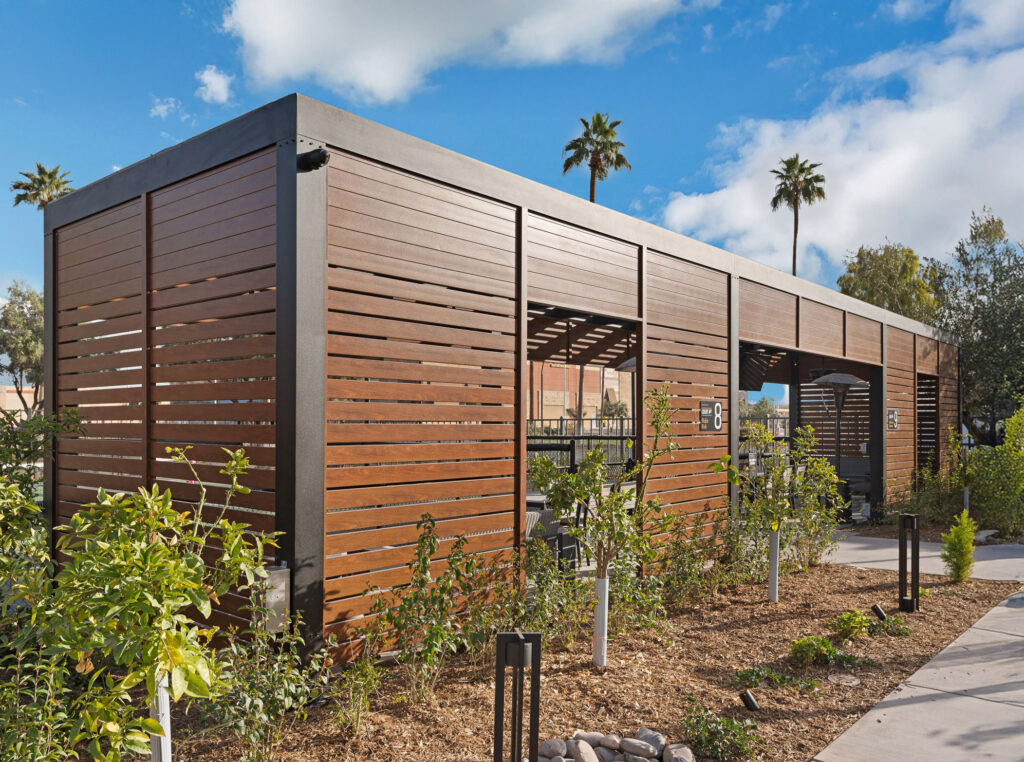
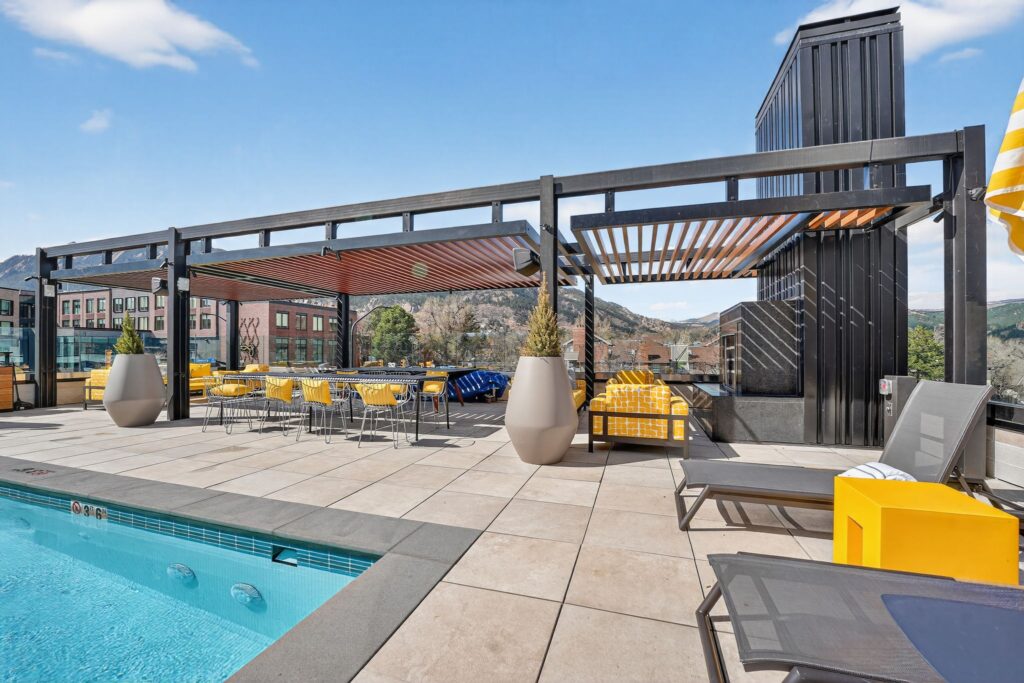
While woodgrain aluminum is often associated with metal facade applications like cladding and battens, its durable, climate-resilient performance makes it well suited for other exterior uses—especially in landscape architecture. Below are a few of the most common landscape architecture uses where woodgrain aluminum helps designers achieve a warm, natural look while maintaining modern performance.
- Pergolas + shade structures: Ideal for courtyards, rooftops, and outdoor amenity spaces—aluminum frames resist warping and splitting, and wood-look finishes deliver the visual softness clients want without seasonal refinishing.
- Fencing + gates: A strong option for perimeter fencing, privacy screens, and entry gates where durability and consistent appearance matter (especially in wet, snowy, or coastal climates).
- Screen walls + privacy panels: Useful for dividing outdoor rooms, screening mechanical areas, or creating wind buffers—often paired with powder-coated metal posts for a clean, contemporary detail.
Material requirements for Landscape Architecture
When specifying exterior materials for landscape projects, aesthetics are only part of the decision. Components need to perform across seasons, withstand daily use, and maintain their finish in harsh environments. A few common requirements include:
- Weather resistance: Materials should tolerate UV exposure, rain, freeze-thaw cycles, and temperature swings without cracking or warping.
- Moisture + rot resistance: Many landscape details sit near irrigated planting beds, pools, or coastal air—meaning constant humidity and standing water can quickly degrade porous materials.
- Low maintenance: Property teams often need solutions that don’t require frequent sealing, staining, sanding, or replacement of individual boards.
- Structural stability: Long, linear members (like slats and battens) should stay straight and dimensionally stable to avoid visible waviness or gaps over time.
- Safety + code considerations: Fire ratings, wind resistance, and splinter-free surfaces can matter depending on the application and location.
- Consistency + repeatability: For larger sites, designers benefit from materials that can be fabricated consistently, match from batch to batch, and integrate cleanly with metal framing systems.
Why Choose Aluminum?
Aluminum is a go-to material for exterior architecture for one simple reason: it’s engineered for durability. When paired with a high-performance woodgrain finish, it offers the warmth of wood with the performance that many landscape applications demand.
- No warping, splitting, or splintering: Unlike natural wood, aluminum won’t absorb moisture—so it stays stable and safe to touch in high-traffic settings.
- Corrosion resistance: Properly finished aluminum performs well in coastal and high-humidity environments, especially when the appropriate pretreatment and coatings are applied.
- Lightweight, strong, and easy to fabricate: Aluminum can span efficiently and is well suited to custom profiles, tight tolerances, and repeatable systems.
- Finish versatility: Wood-look finishes can be tuned to match a range of species and tones while maintaining consistent color across a project. Plus, solid colors and metallics are available as well.
- Lifecycle value: Lower maintenance and longer service life can reduce total cost over time—particularly for commercial and multi-family properties where upkeep adds up quickly.

How Woodgrain Aluminum Is Shaping Landscape Architecture
As outdoor spaces become more program-driven—think rooftop amenities, shared courtyards, and hospitality-style landscapes—designers are being asked to deliver warmth and resilience. Woodgrain aluminum supports that shift by balancing biophilic aesthetics with real-world performance.
For landscape architects, it can be a smart way to:
- Create cohesive indoor-outdoor design language without introducing a high-maintenance material outdoors
- Detail modern, minimalist assemblies that still feel natural and inviting
- Specify long-lasting elements for demanding climates and high-use environments
In other words, wood-look aluminum isn’t just a trend—it’s a practical material evolution for landscapes that need to look good and perform for years.
If you’re exploring woodgrain aluminum for a landscape project, it helps to review finish options early (tone, sheen, and texture) and confirm the right coating system for your climate and exposure conditions.