
Selecting Soffits for Your Next Build
Soffits are a critical piece of a building’s exterior design, serving as a protective barrier and ventilation system and an aesthetic focal point for entrance areas. These important functions mean that selecting the right material for your soffit install is crucial—there are three key considerations we’ll explore in this article: temperature regulation and ventilation, structural protection, and lifespan.
Temperature Regulation and Ventilation
Soffits are a building’s first line of defense when it comes to temperature regulation. Their location on the bottom of the roof line means that it’s crucial to use a soffit material that allows air to enter and continuously flow to improve thermal regulation. Ensuring that ventilation is possible helps keep the entire building cooler, contributing to an overall increase in energy efficiency.
In addition to energy savings, a well-ventilated soffit leads to better moisture regulation in all seasons—whether from snow, rain, or humidity. Preventing moisture buildup is critical for preventing mold. When you choose aluminum soffits, you will automatically avoid common problems like wood rot, too.
Structural Protection
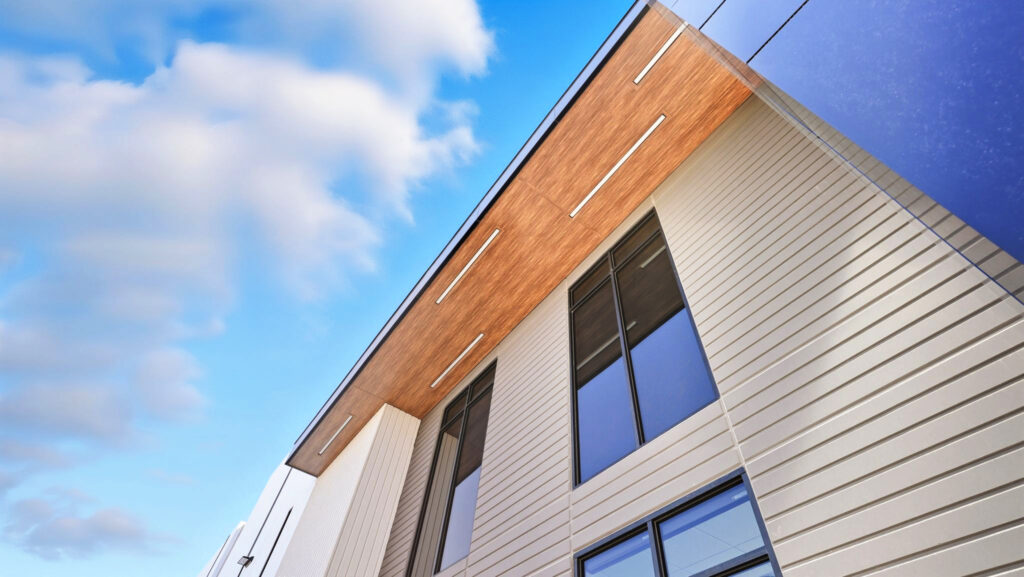
In addition to temperature regulation, high-performing soffits provide a key layer of structural protection to your building’s exterior. As a physical barrier between the elements and the underside of the roof deck, soffits help prevent rain, snow, and wind from inflicting damage to crucial structural fixtures.
Sealing off this area also helps prevent pests from gaining access and inflicting irreversible harm. Using metal soffits like aluminum also assists in deterring insects and other pests that are attracted to wood.
Longer Lifespan
The soffit material you choose should be one that can stand the test of time and weather—especially because soffits are exterior installations that take the brunt of the elements. Powder-coated woodgrain aluminum is warp and crack resistant with minimal fading, resists impact, fire, and wind making it a safe, long-lasting, and low-maintenance choice. When looking for aluminum soffit material, seek out products with a Class A fire rating and a certification for use in high-wind areas—this ensures you’re selecting a material that can withstand even the most challenging environments.
Why is this important? Strong materials require less costly maintenance, refinishing, or replacement over time, leading to a higher ROI for building owners. Plus, less replacement means higher a sustainability factor, an important consideration that is gaining more and more prevalence in today’s building landscape.
In Conclusion: Select Smart Soffit Materials
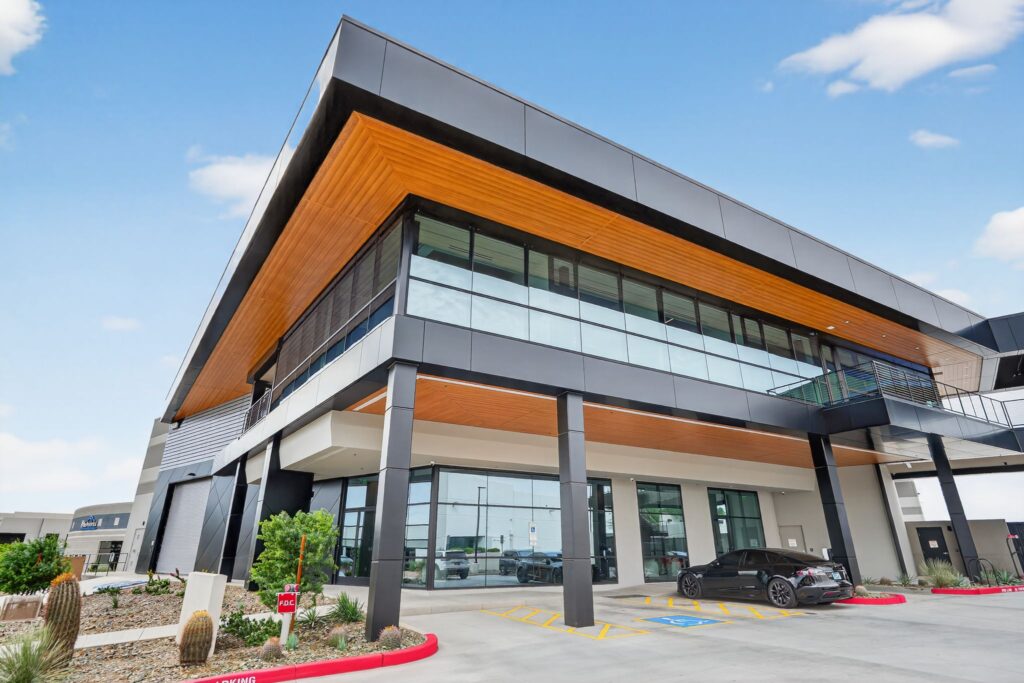
Soffits are a key factor when it comes to building health and lifespan, thus choosing the right material for your soffit install comes down to much more than aesthetics. High-quality powder coated aluminum soffits are a superior choice due to inherent strength, thermal adaptivity, non-combustibility, wind resistance, and low-maintenance considerations. Beyond these performance factors, wood-look aluminum soffits offer an exceptional range of aesthetics, from authentic, inviting woodgrains to contemporary solids, metallics, and more. When making soffit decisions for your next project, choosing metals like aluminum is a smart building choice.