
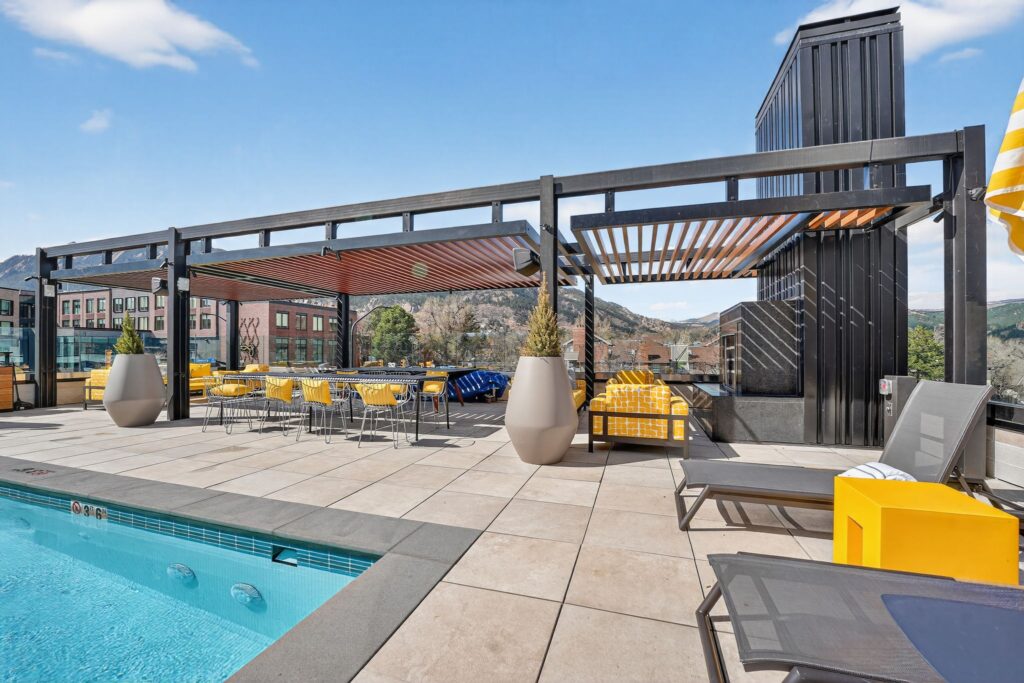
What is an aluminum pergola? An aluminum pergola is a shade structure made from strong, lightweight—often extruded—aluminum profiles, designed to withstand challenging environments while enhancing outdoor spaces.
Imagine yourself looking out at your backyard or restaurant patio in five years. Are you spending your Saturday morning removing stain from a wooden beam, or are you enjoying a coffee under an easy-care patio shade? Choosing between an aluminum and a wood pergola involves more than just appearance; it’s about the time and money you’ll spend on maintenance too. Wood offers a cozy, charming look but often demands consistent sanding and sealing to endure the elements. Powder-coated aluminum structures provide that warmth and character without the hassle of high upkeep.
Financial implications are just as critical as aesthetics. Construction experts often note that the sticker price represents only half of the total investment story. Exploring the trade-off between the upfront savings of lumber and the long-term value of a metal vs wood pergola reveals the true cost of ownership. The hidden “maintenance tax” of traditional timber helps identify which material matches your budget and your willingness to handle repairs.
Why Pressure-Treated Wood Remains a Classic Backyard Staple
Wood is frequently chosen for shade structures for several compelling reasons. When you’re beneath a wooden structure, it offers more than just cover; you can enjoy the natural aroma from oils and tannins that once protected the tree. Although these perks, along with potential cost savings, are substantial, it’s crucial to consider the ongoing maintenance required for wood structures, along with their vulnerability to pests, fire hazards, and weather-related damage.
Selecting the right species is critical for balancing your upfront budget against future durability:
- Western Red Cedar: Famous for its rich color and straight grain, this wood naturally resists moisture. The answer to “how long do cedar pergolas last” depends on sealing, but expect 15–20 years of solid performance.
- Pressure-Treated Pine: Ideally suited for tight budgets, this process involves forcing chemical preservatives deep into the wood fibers to stop decay. However, because the wood is saturated, it is heavy and prone to twisting as it dries.
- Redwood: A premium choice offering a distinct deep red hue and superior stability, ideal for a luxury aesthetic.
Choosing to work with timber means understanding that it is a natural material that changes with the environment. Sunlight and rain lead to expansion and contraction, causing cracks and structural distortion if you skip your yearly upkeep. To prevent rot in pressure-treated wood, regular cleaning, sanding, and re-staining every year or two are essential to lock out moisture. If the thought of spending time and money sanding feels like a task rather than a pastime, exploring other materials that minimize maintenance expenses is worthwhile.
The Rise of Low-Maintenance Modern Pergola Systems
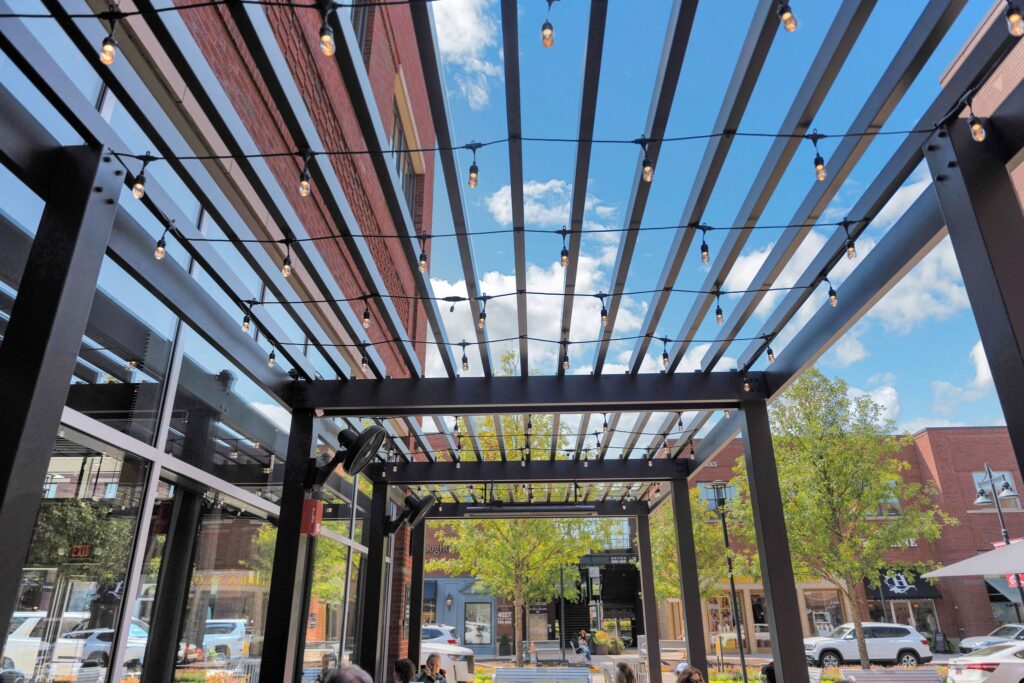
While timber requires constant sealing against moisture, aluminum structures utilize a specialized finishing process called powder coating. Instead of wet paint that sits on the surface and eventually peels, this technique uses an electrical charge to fuse dry color powder directly to the metal, followed by a high-heat bake. This creates a powder coated aluminum finish durability that is virtually immune to the fading, chipping, and rusting that plague traditional patio covers, keeping the structure looking brand new for decades with nothing more than a simple hose-down.
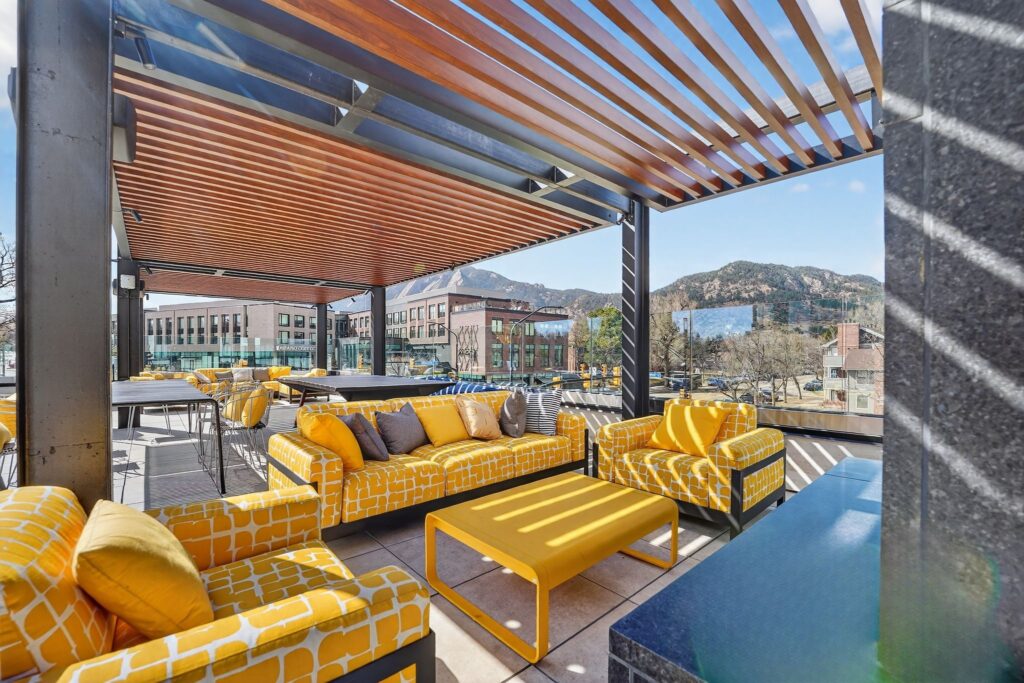
Metal engineering offers mechanical innovations that surpass those possible in wood carpentry. Today’s commercial pergola systems are highly customizable to seamlessly match the structures they accompany. This includes variations in slat and post sizes, angles, and even the overall dimensions and colors of the shade structure. Additionally, they can be designed to offer complete protection from the sun and rain or to enable partial shading.
A common hesitation involves temperature and safety: do metal structures get hot in summer? High-quality aluminum
designs account for thermal expansion and often stay surprisingly cool because they reflect rather than absorb solar energy. Furthermore, unlike dry timber which can become a fuel source, fire resistant patio cover options made of non-combustible metal are significantly safer for placement near outdoor kitchens or fire pits. This advanced engineering implies a higher initial investment, raising the question of how the numbers stack up when you compare the sticker price against years of upkeep.
Crunching the Numbers: Upfront Price vs. the 10-Year ‘Maintenance Tax’
When you conduct a price comparison of pergola materials, wood often appears significantly cheaper initially, yet it carries a hidden “maintenance tax” that accumulates over time. Every two years, timber demands stripping, sanding, and restaining to fight off graying and rot. Aluminum, by contrast, operates as a “buy it once” investment where the upfront cost is higher, but your wallet stays closed after installation.
You may ask, are aluminum pergolas good for my business or home? Return on investment and/or future resale potential are the final factors to weigh against that initial savings. A faded, peeling wooden trellis often looks like a demolition project to a restaurant or hotel customer, and appears as a liability to a home inspector, whereas a pristine metalstructure is viewed as a permanent luxury asset, portraying luxury to potential customers and increasing home value with pergolas significantly. However, financial ROI means nothing if the structure collapses under a snow load. The next critical factor is how these materials survive your specific environment.
Which Material Survives Your Climate? From Coastal Salt to Heavy Snow
If you live near the coast, the salty breeze that makes your morning coffee enjoyable is silently attacking your outdoor furniture. While cedar naturally resists rot, the metal screws holding a wooden pergola together are vulnerable to the elements. In high-humidity or salt-air zones, steel fasteners inside damp wood often trigger galvanic corrosion—a reaction that rusts bolts from the inside out, effectively weakening the structure without warning. Aluminum pergolas and awnings bypass this entirely by using powder-coated surfaces that seal out moisture, making them the best outdoor structure for coastal climates where hidden rust is a constant enemy.
Geography also dictates how much weight your roof—and your deck—must handle. Heavy winter regions require high snow load ratings, which aluminum engineers can precisely calculate, unlike wood which varies significantly by board density. Aluminum’s lightweight nature puts significantly less strain on your patio foundation while offering superior weather resistance of outdoor building materials.
Your Decision Framework for the Perfect Outdoor Shade
Choosing an aluminum vs wood pergola is no longer a gamble. With financial costs and climate risks evaluated, filter your options through this checklist:
- Assess your willingness for constant maintenance projects.
- Define your 10-year maintenance budget.
- Confirm your climate needs.
When deciding between a metal and wood pergola for your commercial or residential project, it’s evident that aluminum pergolas stand out. They are durable, require little maintenance, and can be customized, making them a great choice for those aiming to increase the value of their home or business.