
AI Adoption, Mega Projects & Supply Chain Resilience
Note: To read the entire white paper and dive into the importance of supply chain resilience, data centers, AI tools, and more, download the entire white paper here.
The State of the AEC Industry: Introduction
The architecture, engineering, and construction (AEC) industry stands at a crossroads in 2026. After navigating a turbulent 2025 marked by inflation, rising interest rates, tariff uncertainty, and persistent supply chain disruptions, firms now face a critical question: How can they future-proof their business strategies amid ongoing industry uncertainties?

While challenges remain, 2026 also presents unprecedented opportunities. Recent data shows a 30% year-over-year increase in commercial and institutional planning activity as of August 2025, signaling renewed momentum after months of cautious inactivity. This resurgence is being driven by surging demand in data centers and energy infrastructure—sectors experiencing exponential growth fueled by AI adoption, cloud services expansion, and the transition to renewable energy. The path forward requires a strategic shift in how AEC professionals approach their work.
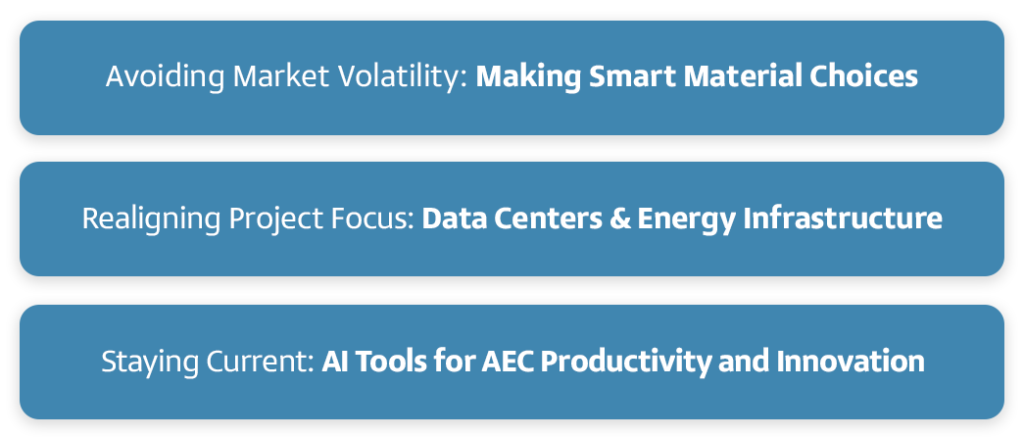
Success in 2026 will depend on three key pillars: smart material procurement strategies that mitigate supply chain volatility through domestic sourcing and strategic stockpiling; realigning project focus to capitalize on mega-project opportunities in data centers and energy infrastructure; and embracing digital transformation through AI-powered tools that enhance productivity across design, planning, and execution. Even building product manufacturers like Parallel are leveraging AI to improve their operations. Advanced manufacturers now use AI-driven systems to optimize production processes—from determining precise spray gun speeds and spacing for powder coating to ensuring consistent product quality while reducing material waste. These innovations enable manufacturers to deliver more reliable products on tighter timelines, making them better partners for the demanding projects ahead.
This white paper explores how AEC companies can position themselves for greater stability and growth by addressing market volatility head-on, seizing opportunities in high-growth sectors, and adopting the technologies that will define the industry’s future.
Upcoming in this white paper:
Avoiding Market Volatility: Making Smart Material Choices
When it comes to future-proofing your AEC business, one of the clear challenges is how to weather the storm of market volatility. In 2025, tariffs brought fluctuating uncertainty and price increases across the industry. This, paired with supply chain disruptions and inflation, made it difficult for architects and contractors to make material selections for projects. Where these professionals may have looked to procure metals, for example, from countries outside of the US in the past, this has now become costly and more time consuming.
Domestic Sourcing
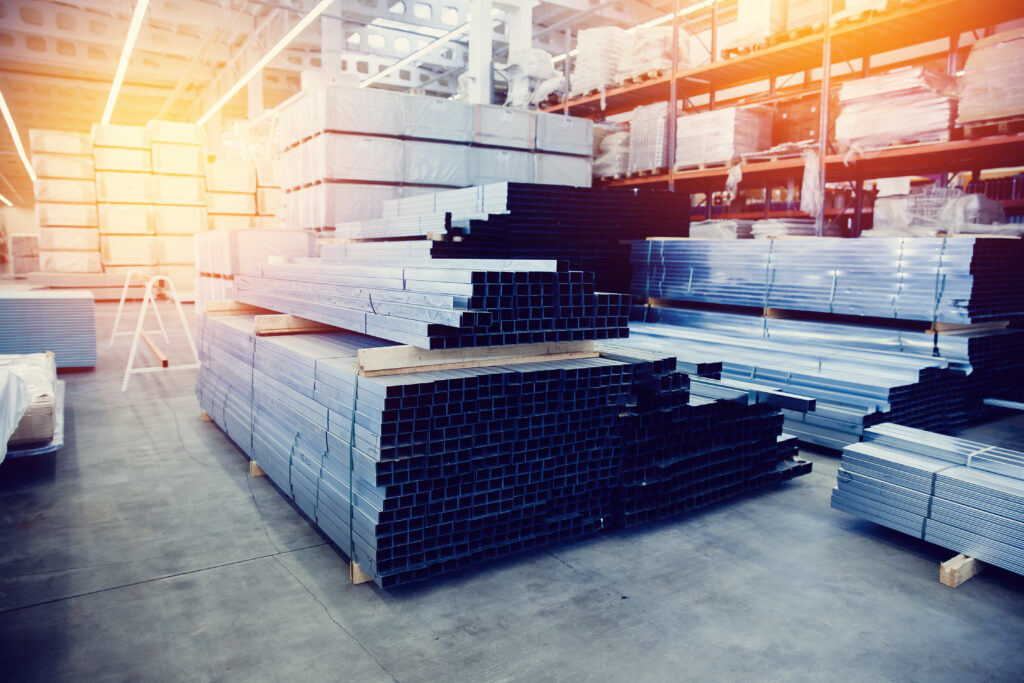
Choosing USA-made building materials is now more important than ever. By sourcing materials domestically, AEC firms can avoid the unpredictability of tariffs and international shipping delays while supporting local economies. Domestic manufacturers can often provide shorter lead times and more reliable delivery schedules, which is critical when project timelines are tight and clients demand certainty.
Strategic Stockpiling
Another effective strategy for managing material costs and availability is strategic stockpiling of critical components. When market conditions are favorable or when advance project planning allows, purchasing and storing essential materials can protect against future price spikes and supply shortages. This approach requires careful forecasting and strong relationships with manufacturers who can provide guidance on optimal ordering quantities and timing. Working with a reliable material partner that understands your project pipeline and can help you plan proactive procurement strategies is essential for maintaining control over both costs and timelines in an unpredictable market.
Realigning Project Focus: Data Centers and Energy Infrastructure
In 2025, new commercial construction plateaued due to the market challenges we’ve addressed, while data center and energy infrastructure saw significant growth. Projects in these sectors are often considered “mega projects” due to the size and scope of the build. This means that while the data and energy spaces provide ample opportunities for architecture and engineering firms, the amount of preparation, manpower, and material required to execute the needs of the project is vast. In order to land these projects and keep up with the subsequent demand, firms must ensure they not only maximize productivity internally […]
To continue reading about the importance of data center projects, AEC AI tools, and more,
download the free white paper here.
Sources:
- https://www.deloitte.com/us/en/insights/industry/engineering-and-construction/engineering-and-construction-industry-outlook.html
- https://blog.chaos.com/the-state-of-ai-in-architecture-survey-insights
- https://www.weforum.org/stories/2026/01/power-infrastructure-grid-energy-security/#:~:text=The focus of the energy,of total global electricity generation
- https://www.altenergymag.com/news/2026/01/13/clean-energy-infrastructure-industry-growth-driven-by-renewables-and-evs/46649/#:~:text=Clean Energy Infrastructure Industry Growth Driven by Renewables and EVs,-Visit https://&text=The clean energy infrastructure industry,expansion%2C and strong government support.&text=According to a new report,of clean energy infrastructure worldwide.
- https://www.deloitte.com/us/en/insights/industry/power-and-utilities/data-center-infrastructure-artificial-intelligence.html